Kilted Surname Ancestry

Detected: 56

Publish Comment

[1] 2 3 4 5 6 7 8 9 ...19Next

Scottish National :: Tartan


from Scotland
Post # 56
30.11.2025 | 02:48
Scottish National Tartans

:oops: 3 Celts & Company • "THE SCOTTISH TARTANS"

Julius Caesar and other early observers were much struck by, among other things, the Celts' love of Colour. To describe their cloth patterns rather baffled the soberly clad Romans (stripes, chequers or what?) but we may shrewdly guess one type conspicuous among those textiles. Except in one or two isolated villages of Europe, the Tartan design was preserved only in Scotland, and the word has now been credibly explained as a Pictish description. Here the 'weft-as-warp' striping were applied not always to the same form of garment. The kilt began developing about 1600 from a large swathing plaid with a belt ['The Great Kilt'], into the shortened pleated form we now know. In Scotland a Plaid is a shawl or wrapping, with or without any distinctive pattern such as the once-famous 'Paisley Plaids.' Some exported Tartan plaids have by now caused various parts of the world to forget all others and employ the word Plaid to mean the Tartan colour-pattern or a coloured checking of similar style.
The Scottish Tartans as a system of popular Heraldry only developed fully after Culloden had crushed the Clan System itself from active politics. Like the flow of Jacobite songs, the Tartan provided an outlet for national sentiment, after the period 1748 to 1782 when the kilt and tartan alike were severely prohibited. Thereafter ensued a steady growth of tartans distinguishing the main Scottish clans and families, with a few of the earliest type which had attached rather to districts than to a particular clan. A list is added of the longer established tartans, out of about 500 currently registered with the Lord Lyon King of Arms.
Apart from its value as an emblem of clan, country or regiment, the Tartan has two main functions: as an inspiration expressed in colour, and also for camouflage on the heather moors. When the general Clan Tartan has been felt insufficiently effective for one of these objectives, a second one has appeared termed 'Dress' or 'Hunting' respectively.
A Scot by descent should wear the tartan of his father's clan or family, or sept associated with one: alternatively that of his mother, his wife, or of the district he derives from. Many names indisputably Scottish have not been associated with any recognized clan. For uncertain cases, as for our many friends of non-Scottish descent desiring to express some measure of compliment or guestly feeling, there are the Stewart and Jacobite tartans, and otherwise such clans as MacDonald or Gordon who have seemed generally to welcome such tribute.

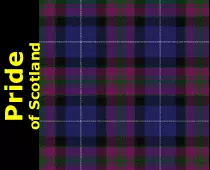
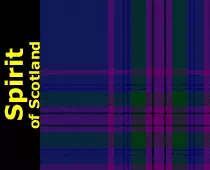
Scottish National Tartans: PRIDE of SCOTLAND, SPIRIT of SCOTLAND

"THE SCOTTISH TARTANS." Scots Kith and Kin and Illustrated Map Revised Second Edition. Edinburgh, SCOT: Clan House, c.1970. p.84. Print.

keywords[x] tartan, wool, kilts, Scottish, Scotland, clan

Pride of Scotland Tartan, 3celts.com
Spirit of Scotland Tartan, 3celts.com
Quote this message

Clans of Scotland


from Scotland
Post # 55
29.11.2025 | 18:01
Clans of Scotland

:oops: 3 Celts & Company • "CLANS OF SCOTLAND"

DEFINITION OF THE WORD "CLAN"

"Clan" was the name applied to a group of Kinsmen united under a chief and claiming a common ancestry. They lived as one great family on the lands they possessed. The clansmen or septs supported their chief with remarkable loyalty.
In the 13th Century, the clans rose to prominence. Records of their separate history have been kept enabling all Highlanders to trace their ancestors to that period and in some cases, to a much earlier date.

"CLAN ALPIN."

Clan Siol Alpin: the race of Alpin mac Eochaid.

Maormorship of Ross:: Anderson/Anrias/Siol Andreas, Kenneth/MacKenzie, Matthew/Mathieson, Siol Alpin.

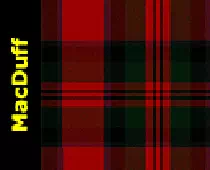
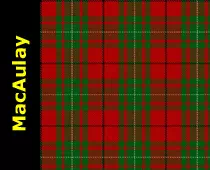
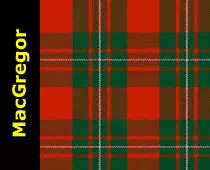
Tradition claims MACALPIN or MACALPINE as the oldest and most purely Celtic of the Highland clans, of royal descent from the dynasty of Kenneth MacAlpin who united Picts and Scots into one kingdom from the year 850, and transferred his capital to Perthshire, from Dun Add in Dalriada (beside Loch Crinan). However, no clan of the name survived into the heyday of the clan system, though individual MacAlpins are recorded from the 13th century, mostly then in Perthshire. Clan Macgregor claims origin from that royal MacAlpin stock: as also do MacAulay, MacDuff, MacFie, MacKinnon, MacNab, and MacQuarrie.

"CLANS OF SCOTLAND." Scots Kith and Kin and Illustrated Map Revised Second Edition. Edinburgh, SCOT: Clan House, c.1970. p.49. Print.

"Ancient North Scotland." The Highland Monthly - Volume 2. Edinburgh: JOHN MENZIES & CO. c.1890-91. p.546. Print.

keywords[x] tartan, wool, kilts, clan, septs

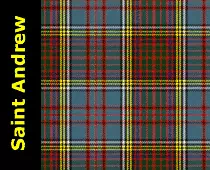
Anderson Tartan, 3celts.com
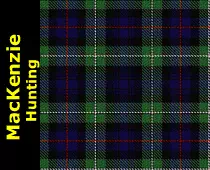
MacKenzie Hunting Tartan, 3celts.com
Comyn or MacAulay Tartan, 3celts.com
MacDuff Tartan, 3celts.com
MacGregor Tartan, 3celts.com
Quote this message

Anderson :: Anrias


from St. Andrews, Scotland
Post # 54
29.11.2025 | 17:27
Anderson see St Andrew

:oops: 3 Celts & Company • "ANDERSON :: SAINT ANDREW"

Clan Siol Andreas: the race of Andrew/Anrias.

The cult of St Andrew came to the east of Scotland from Europe in the 9th century (c.834 AD). It was distinct from the early Celtic church, which came from Ireland, and the traditions of the different groups of peoples who had lived there in earlier centuries.

The cult soon became well established, and many people went on pilgrimages to St Andrews, its centre. Pilgrims believed that the relics of St Andrew had been brought there by St Rule (a.k.a Saint Regulus). According to legend, St Andrew, one of Christ's disciples, was crucified on an X-shaped cross.

According to the various accounts Regulus was either shipwrecked or told by an angel to stop intentionally on the shores of Fife at the spot called Kilrymont, a Pictish settlement which is now St. Andrews. Here he was welcomed by a Pictish king, Óengus I (fl. 732-761, mac Fergus-the-Tall). Regulus is claimed to have brought three fingers of the saint's right hand, the upper bone of an arm, one kneecap, and one of his teeth.

By the early 14th century, St Andrew was recognised as 'patron and protector' of the Scots, replacing St Columba. His symbol, the Saltire, was adopted as the national emblem. It was carried at the field of Bannockburn in 1314 along with the Brec Bennoch of St Columba, which has in the past been associated with the Monymusk reliquary, also in the National Museum of Scotland.

Images of St Andrew are also found in the Jacobite collection, in particular on the badges of the Order of the Thistle, the greatest Order of Chivalry in Scotland. The Order was established by James VII and II in 1687, to reward Scottish peers who supported his political and religious aims. After his exile to France, the deposed King continued to use it to encourage loyalty among his supporters. The Order continues today [...] Bonnie Prince Charlie was keen to emphasize his Scottish roots to encourage support, dressing in tartan during his ill-fated time in Scotland, which ended with his defeat at the Battle of Culloden.

For centuries the Saltire has been used as a symbol of the Scottish people, and it continues to represent the nation today :oops: on earth and in space! His flag was flown at Holyrood and then taken on space shuttle mission STS-116 to the International Space Station by astronaut Nick Patrick, whose mother came from Skye.

"ST ANDREW and the SALTIRE." National Museums of Scotland. [https://www.nms.ac.uk/explore-our-collections/stories/scottish-history-and-archaeology/st-andrew-and-the-saltire/] St Andrew and the Saltire . [Archieved]. 05 Aug 2020. web.

"Ancient North Scotland." The Highland Monthly - Volume 2. Edinburgh: JOHN MENZIES & CO. c.1890-91. p.546. Print.

"The Duan Albanach (Song of the Scots) ." the Lebor Bretnach. Nennius. Trans, William F Skene. Chronicles Of The Picts - Chronicles Of The Scots And Other Early Memorials Of Scottish History. H.M. General Register House, Edinburgh. 1867. Print.

keywords[x] tartan, wool, kilts, Anderson, St. Andrew, clan Ross, clan Chattan, septs

Anderson Tartan, 3celts.com
Quote this message
[1] 2 3 4 5 6 7 8 9 ...19Next

Publish Comment

All rights reserved.

© Satified Customers "3 Celts & Company"