Kilted Surname Ancestry

Detected: 5

Publish Comment

[1] 2 Next

Irish Tartan Plaid see also


from Ireland
Post # 5
30.11.2025 | 03:18
Irish Tartan Plaids see also: MacDonald, buchanan and MacNeil

harp 3 Celts & Company • "THE IRISH TARTANS"

Although not a traditional component of national dress outside Scotland, kilts have become recently popular in the other Celtic nations as a sign of Celtic identity. Kilts and tartans can therefore also be seen in Ireland, Wales, Cornwall, the Isle of Man, Brittany, Galicia in Spain, the Trás-os-Montes region in the North of Portugal, and Normandy, as well as parts of England, particularly the North East.
Though the origins of the Irish kilt continue to be a subject of debate, current evidence suggests that kilts originated in the Scottish Highlands and Isles and were adopted by Irish nationalists at the turn of the 20th century as a symbol of Celtic identity. A garment that has often been mistaken for kilts in early depictions is the Irish lein-croich, a long tunic traditionally made from solid colour cloth, with black, saffron and green being the most widely used colours. Solid coloured kilts were first adopted for use by Irish nationalists and thereafter by Irish regiments serving in the British Army, but they could often be seen in late 19th and early 20th century photos in Ireland especially at political and musical gatherings, as the kilt was re-adopted as a symbol of Gaelic nationalism in Ireland during this period.
Tartan was worn originally in Scotland as a fashionable type of dress. All tartan was, of course, hand woven and each weaver would take it upon him or herself to create unique and attractive designs based on the colors of dyes available. Certain colors may have been more common in certain regions, but there was nothing to prohibit someone with money from importing various dyes. Certain pattern schemes may have been more common in one area than another, but nothing approaching modern clan tartans could be said to have existed.
Imagine talking to a hand weaver of tartan, a craftsman and an artist, and telling that person that you wanted them to weave the same pattern of tartan in the same colors for everyone in the region (regiment, clan, etc.). That pattern was set in stone, could not be varied from and was to be the only pattern woven for that clan. Of course they would never have taken such commands! Tartan was and still is an art form and individual weavers created a wonderful variety of tartan designs.
By the 16th century, when we begin to see the earliest type of kilted garment (the belted plaid), tartan had become characteristic of Highland Dress. Gaelic speaking Highlanders wore tartan of bright and flashy shades to show off wealth and status. They also favored darker, natural tones that would emulate the shades of the bracken and the heather so that they might wrap themselves in their plaids and be hidden. But the colors chosen had more to do with what dyes were available to them (either locally or that they could afford to import) and personal taste than any clan affiliation.

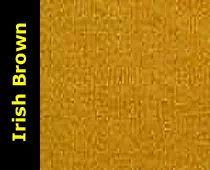
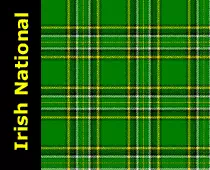
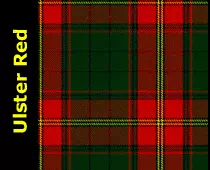
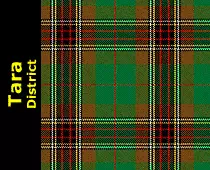
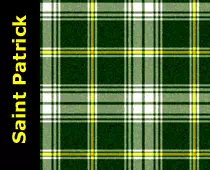
Irish Tartans: SAFFRON (Irish Brown), IRISH NATIONAL (Tara), ULSTER RED, SAINT PATRICK, IRISH BLACK, TARA DISTRICT

"Kilt". Wikipedia. wiki Kilt . December 2013. web.

Newsome, Matthew. "The Early History of The Kilt". Scottish Tartans Museum. wiki Kilt . [Archieved]. 2000. web.

The Scottish Register of Tartans (SRT). tartanDetails ref=4071 . 31 December 2018. web.

keywords[x] tartan, wool, kilts, Irish, Celtic, Gaelic, nationalism

Irish Brown Tartan, 3celts.com
Irish National Tartan, 3celts.com
Ulster Red Tartan, 3celts.com
Saint Patrick Tartan, 3celts.com
Tara District | Murphy Tartan, 3celts.com
Quote this message

Clan buchanan. and McMillan


from Scotland
Post # 4
29.11.2025 | 16:42
Clan buchanan, see also MacMillan Ancient

harp andrew 3 Celts & Company • "buchanAN"

Clan Siol Ui'Cain: the race of O Kyan ( the Cathan/Chattan ).

Maormorship of Moray:: clans Chattan, Cameron, Nachtan/MacNachton/Nacton, Gillean/MacLean/MacLaine, Siol O'Cain:: Munro/Clann an Rothaich/Roich & Gillemheol/MacMillan.

Legend derives the clan's original name MacAusian from Irish prince Anselan O Kyan, granted a settlement in Lennox by Malcolm II. The Auselan first actually recorded was Steward to a 13th-century Earl of Lennox, from whom he obtained the Loch-Lomondside district of buchanan, which includes Ben Lomond. His son Gilbert was the first user of the buchanan surname, as well as founder of the branches that took his own name. From Gilbert's brothers Colman and Methlan, grandson Maurice and great-granson Walter there derive other sept names, and the separated clan MacMillan.
George buchanan, a fore-runner (though in Latin) of Burns and Byron, the tutor of Montaigne, Mary Queen of Scots and James VI, historian and Reformationist, ranks as the clan's chief personality, though a U.S. President could be among others cited.

Septs: COLMAN, CORMACK, COUSLAND, DEWAR, DOVE, DOW, GIBB, GIBBON, GIBSON, GILBERT, GILBERTSON, HARPER, HARPERSON, LEAVY, LENNIE, LENNY, MACALDONICH, MACALMAN, MACASLAN, MANASLIN, MACAUSELAN, MACAUSLAN, MACAUSLAND, MACAUSLANE, MACALMAN, MACCALMONT, MACCAMMOND, MACCASLAND, MACCHRUITER, MACCOLMAN, MACCORMACK, MACCUBBIN, MACCUBING, MACCUBIN, MACGEORGE, MACGIBBON, MACGRREWSICH, MACGUBBIN, MACINALLY, MACINDEOR, MACINDOE, MACKINLAY, MACKINLEY, MACMASTER, MACMAURICE, MACMURCHIE, MACMURCHY, MACNEUR, MACNUIR, MACNUYER, MACQUATTIE, MACWATTIE, MACWHIRTER, MASTERS, MASTERSON, MORRICE, MORRIS, MORRISON, MURCHIE, MURCHISON, RICHARDSON, RISK, RUSK, RUSKIN, SPITTAL, SPITTEL, WALTER, WALTERS, WASON, WATERS, WATSON, WATT, WATTERS, WEIR, YUILL, YOOL, YULE, ZUILL

"MACMILLAN" The term 'ancient' normally describes a change in colour that can be applied to any tartan. In the case of MacMillan the 'ancient' form involves a more radical change, justifying the traditional use of the adjective in the name of the tartan. James Logan, co-author of 'The Clans of the Scottish Highlands' (1847), states that this version is identical with buchanan. The thread count was deduced by J. Cant from the illustration by R.R. MacIan in the same work.

"BUKANSIDA" an Old Norse place name. "-an" Scot masculine suffix used to form nouns often for male given names. The Earldom of Mar and buchan formed one of the seven original Scottish earldoms (Kingdom of Ce). Alba's stone circles are most densely concentrated near Aberdeen, in old buchan.

"Odin's Stone" Promise of Odin, a promise of marriage or particular sort of contract, accounted very sacred by some of the inhabitants of Orkney. [...] the Stone at Stenhouse with the round hole in it, [...] was customary, when promises were made, for the contracting parties to join hands through this hole; and the promises so made were called the promises of Odin.

"PROMISE of ODIN." An Etymological Dictionary of the Scottish Language: Volume 2. Edinburgh, SCOT: University Press, c.1808. chap.O. Print.

"BUKANSIDA". Grímur Jónsson Thorkelin. Fragments of English and Irish history in the ninth and tenth century. London, UK. 2 Nov 1788. map. Print.

"buchanAN." Scots Kith and Kin and Illustrated Map Revised Second Edition. Edinburgh, SCOT: Clan House, c.1970. p.50. Print.

"Ancient North Scotland." The Highland Monthly - Volume 2. Edinburgh: JOHN MENZIES & CO. c.1890-91. p.546. Print.

"MACMILLAN ANCIENT" National Records of Scotland, H.M. General Register House, 2 Princes Street, Edinburgh, EH1 3YY. tartanDetails ref=2657 . 2019. web.

keywords[x] tartan, wool, kilts, buchanan, clan, septs

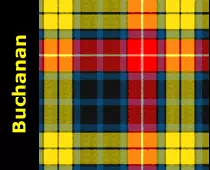
Clan Buchanan Tartan, 3celts.com
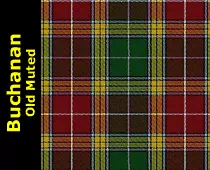
Buchanan Ancient and Muted Tartan, 3celts.com
Quote this message

Cumming • Comyn


from Scotland
Post # 3
29.11.2025 | 15:00
Cumming • Comyn

andrew 3 Celts & Company • "CUMMING"

The Cummings or Cumyns trace Norman descent from Charlemange through Robert de Comyn, appointed governor of Northumberland in 1068 by his kinsman William the Conqueror. Under David I, William de Comyn became Chancellor of Scotland in 1133. Settled first in Roxburghshire, the family later gained through marriages the earldom of buchan and Balenoch; and Altyre in Moray has long been the seat of their chief.

tounge From 1309 the Comyn's power was broken through their having contested Bruce's succession to the throne. Sir John ('the Red') Comyn's mother was the sister of ex-king John Baliol. He was slain by Bruce's party at Dumfries [Grey Friars], and the buchan Comyns were defeated in battle at Inverurie, 1308.
Septs: buchan, CHEYNE, CHIENE, COMMON, COMMONS, CUMMIN, CUMMINGS, CUMYN, FARQUHARSON, MACNIVEN, NIVEN, RUSSELL

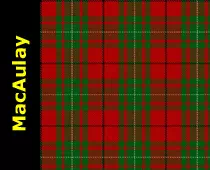
The Comyn tartan sett closely resembles the 'Vestiarium' version, but is in fact the one given by Logan as MacAuley and illustrated by MacIan in 'The Clans of the Scottish Highlands', 1847. The Smith brothers said that the sett had the approval of the head of the family of Cumming.
The source of tartan 1157 was: W. and A. Smith. Mauchline, East Ayrshire, SCOT.

"CUMMING." Scots Kith and Kin and Illustrated Map Revised Second Edition. Edinburgh, SCOT: Clan House, c.1970. p.53. Print.

"Comyn or MacAulay Tartan STWR Ref:1158." Scottish Tartans World Register No.1157. [Archived]. 7 October 2007. web.

keywords[x] tartan, wool, kilts, Cumming, clan, septs

Comyn or MacAulay Tartan, 3celts.com
Quote this message
[1] 2 Next

Publish Comment

All rights reserved.

© Satified Customers "3 Celts & Company"